
The scroll is faster than ever.
In a 2023 study by LinkedIn and MediaScience, researchers found that people make a decision to skip or stay on digital content within 3.7 seconds (interestingly, this time was noted to not even be consecutive: users would jump between the previous and following posts on their feeds). The science is clear: TikTok, reels, shorts and other short-form video have trained us to flick past content at record speed. Even LinkedIn is catching up and showing how all audiences: corporate, casual, or creator have internalised the same habits: swipe, skip, forget.
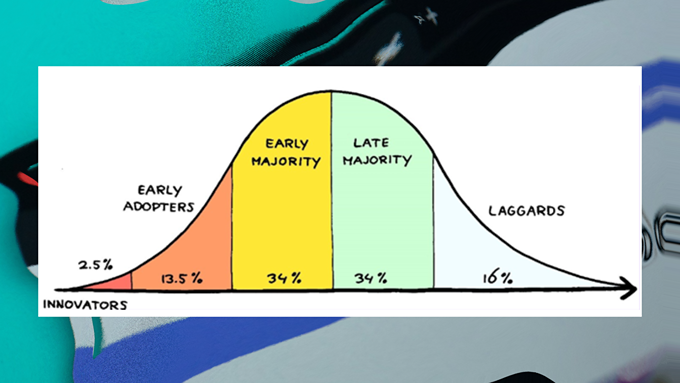
If you’re in marketing, you already know this well (hook, hook, hook!)- but what is rapidly changing is the sheer amount of content that is going to be fed to online users in the coming years. With AI photo and video generation technologies crossing over from the early majority to late majority, we’re set for a year where AI will exercise full dominance of the algorithms and by effect, our attention spans. So the question is: what can we do?
Speed.
In the past, you might have been tempted to “build up” to the message. Now? Start with the message upfront.
In most audiences, attention isn’t earned over time anymore. If your content doesn’t communicate value immediately, it’s gone. That means leading with outcomes or pain points in the first 1–2 seconds of a video. Another way to achieve this is using headlines and captions that stand alone, even without context. Lastly, experiment with designing carousels, blogs, and ads where slide 1 or sentence 1 delivers the core idea.
Don’t ask people to “wait for the twist.” There’s no time. The hook is now the value proposition. Remember: out of sight, out of mind!
Movement.
2026 digital marketing needs movement, pattern breaks, and rhythm. Not just for social, but for everything.
People scroll like they’re on a conveyor belt. If your content doesn’t interrupt the flow, it’s likely invisible to your audience.
- Try eye catching and disrupting visuals (bold text on slide 2, unexpected zooms, rapid pacing)
- Jump cuts and motion graphics in videos that otherwise would be basic
- Visual storytelling: a ‘micro’ narrative that evolves as the user is watching
Even newsletters and PDFs can make use of motion graphics. Think animated GIFs, collapsible sections, embedded video snippets.
“Value Per Second” should be your new metric
Marketers of the past used to ask: “How long will someone stay on this page?”
Now the question should be: “Did we communicate enough in the first 3 seconds?”
High-performing content in 2026 answers a question, solves a problem, or delivers an emotion instantly.
Try out the following formats:
An infographic that gives you the whole point at a glance.
A tweet-length caption that teaches something in 15 words.
A video where the “how-to” is the first frame, not buried halfway.
More content doesn’t equal more value. More value per second does.
Design for scan, not scroll
People don’t even skim anymore- they scan. Fast eyes, pattern detection, thumb-hovering.
Your landing pages, ads, emails, and social posts should be visually chunked (clear sections, headings, icons), caption-ready (because ~80% of video is watched on mute!) and most importantly- Designed for first-glance comprehension.
Ask yourself: If someone only sees the first 20% of your content, what will they remember?
Build Trust QUICK
In 2026, your audience might never read your full caption. Or finish your reel. Or open the next slide.
You still need to make a lasting impression:
- Repeating brand elements (tone, aesthetic, colours, phrases) across platforms
- Packaging trust signals (reviews, recognitions, certifications) into visual snippets
- Prioritising consistency over depth- because most people will engage briefly, but many brief moments = one strong brand memory

Improvise, Adapt, Overcome
It isn’t great that this is the current state of the average person’s attention span, but if you want to be remembered you unfortunately have to play the game. If you’re lucky and your audience has a more mature attention span, then lucky you!
But chances are, for the most part, you only have ~3s to make an impact.
Rather than stretching for virality, stretch for clarity, brevity, and consistency. Show up in ways your audience already consumes. Give value without delay. Leave impressions that last beyond the skip.
If your brand can win attention fast in 2026, it can win trust over time.
If you feel like you need help navigating this new landscape, then get in touch with us! We would love to worry about these problems for you.