
In 2012, a 19-year-old was delivering pizzas across Birmingham at night and stitching gym vests in his parents’ garage during the day. Thirteen years later, that same guy runs one of the fastest-growing fitness apparel brands in the world.
The numbers alone are impressive. Gymshark just closed its financial year to July 2025 on £646 million in revenue, its strongest annual sales result to date. That is 13 consecutive years of growth since the company was incorporated. And for the first eight of those years, they took zero outside investment.
We want to break down how it actually happened. Not the polished LinkedIn version. The messy version, and then the model underneath it that any ecommerce founder can learn from.

£1,000 to Start
Ben Francis was studying at Aston University and working Pizza Hut delivery shifts to cover his costs when he and his school friend Lewis Morgan incorporated Gymshark in July 2012. He was 19. They had no capital, no investors, and no manufacturing experience.
They put £1,000 into a sewing machine and a screen printer and started producing garments by hand in Francis’s parents’ house. The first few products were basic. Screen-printed stringer vests and t-shirts aimed at young gym-goers who could not find anything fitted enough in mainstream stores.
What most people miss about this part of the story is that Gymshark was not Francis’s first idea. Before landing on apparel, he had already tried several other business ideas that did not work, including two fitness apps and a supplement dropshipping site. He was iterating for over a year before the sewing machine came out.
The lesson buried in that period is unglamorous but useful: the founder story you eventually tell is almost never the one you set out to build.
The Expo That Changed Everything
Every founder story has one moment where the trajectory shifts. For Gymshark, it was the BodyPower Expo in 2013.
Francis and his small team borrowed money to afford a stand. They had no idea whether anyone would come. What actually happened was that the fitness YouTubers Francis had been quietly sending free product to for months turned up to the stand, and their fans followed them. The entire inventory sold out in 90 minutes, and Gymshark closed that year on around £250,000 in revenue.
That expo is where the influencer strategy revealed itself as something more than a hunch. The creators who had been wearing Gymshark on their channels had built such trust with their audiences that a single event brought thousands of people through the stand. Francis has since said in interviews that it was the moment he realised the brand had something the incumbents did not.
The Black Friday Disaster
Growth kept accelerating, but the infrastructure did not always keep up. In November 2015, the Gymshark site crashed for eight hours on Black Friday, costing the company an estimated £100,000 in lost sales. Thousands of customers were furious. For a young brand still building trust, it could have been the end.
Instead of hiding behind a corporate statement, Francis posted a personal apology video. No PR team, no polished script. He explained what had happened, took the responsibility, and offered refunds and vouchers. The response was almost the opposite of what you would expect. Customers forgave him, and in many cases came back more loyal than before.
This part of the story matters because it is the origin of something Gymshark got right long before most of its competitors: authenticity as a business decision, not a marketing slogan. The apology was free. The trust it built was expensive to replicate.
The crash also forced a hard technical decision. Gymshark had been running on Adobe Commerce (Magento), and the platform could not handle their traffic. They eventually migrated to Shopify Plus, and years later that migration is still cited in ecommerce case studies as one of the more notable enterprise moves in the space. If you are curious about the wider Shopify story and where it fits for a smaller business, we covered that in our post on how Shopify changed ecommerce for small businesses.
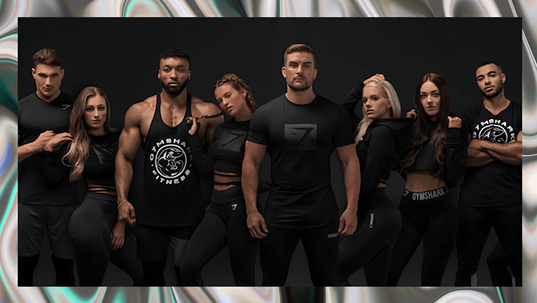
What Gymshark Actually Built
Now to the mechanics. This is where the useful part starts, especially if you run an ecommerce business or are thinking about starting one.
They stayed direct-to-consumer for as long as possible. Gymshark did not chase retail deals with big sporting goods chains. They sold from their own website, controlled their own customer data, and kept their margins. That decision meant slower geographic reach in the early years but a much healthier business by the time they scaled.
They took no outside money for eight years. Gymshark ran entirely on retained earnings until August 2020, when General Atlantic bought a 21% stake at a valuation of over £1 billion, making it the first UK DTC brand to reach unicorn status without prior external funding. That is a genuinely rare outcome. Most DTC brands that hit unicorn status did so on the back of aggressive venture funding rounds that started in year two or three.
Their marketing was creator-first before that had a name. In 2012 and 2013, Francis was personally identifying fitness YouTubers whose audiences matched who he wanted to reach, reaching out directly, offering free product, and asking them to wear it if they liked it. No guaranteed posts, no contracts, no tracking links. The creators he seeded then, most of whom had audiences between 50,000 and 500,000 subscribers, grew with the brand over the next decade.
The naming was deliberate too. Gymshark calls its creators “Athletes,” not “ambassadors” or “partners”, a small language choice that signals belonging rather than a transactional relationship. Most brands that copy the tactic skip that part.
They reinvested aggressively even when it hurt the bottom line. Gymshark’s FY25 pre-tax profit fell to £7 million from £11.9 million the year before, because the brand is deliberately pouring money back into growth. EBITDA still grew to £53.3 million with margins holding at 62.3%. That is a specific choice: prioritise long-term positioning over quarterly profit. Public markets often punish this. Private ownership lets Gymshark play the long game.
If You Are Building Something…
The temptation with a story like Gymshark’s is to walk away with the wrong lesson. It is easy to look at £646 million in revenue and assume the answer is “get lucky, then scale.”
The actual pattern is more useful.
Francis tested seven ideas before Gymshark. He funded the first products with money from delivering pizzas. He built his community by watching content he genuinely enjoyed and reaching out to the creators as a fan first and a founder second. He handled his biggest public failure by taking responsibility on camera. He held equity for as long as possible and only took investment when it was on his terms.
None of those decisions required capital. They required patience, product judgment, and a willingness to build slowly in public. Any ecommerce founder can copy that pattern. What you cannot copy is the shortcut, because there was not one.
The other thing worth taking away is that Gymshark’s early advantage was almost entirely digital. A well-built website that could handle the traffic, a clear brand identity, and consistent content from creators who actually cared. In 2012 that was novel. In 2026 it is basic necessity, and the businesses that treat their website and their online presence as an afterthought are the ones being left behind.
That is the part we spend most of our time on. If you are building something and you want your online presence to actually match the story you are telling, get in touch with us and we will take a look at what your current setup is doing for you and what it could be doing instead.
Ben Francis did not have a website worth talking about when he started. He built one that eventually crashed under its own success. Yours does not need to make the same journey.